
Last Updated: November 2, 2026
Quick Summary
Solar panels keep producing power on cloudy days in Florida, just at a reduced rate, because cells collect scattered light that bounces through clouds. Thick overcast skies cause the biggest drop, while thin clouds barely affect output. Clouds rarely cut production to zero.
- Heat is a quiet thief, since panels lose efficiency as Florida roofs get hotter.
- Rain rinses dust and pollen off the glass, so clean panels catch more light once skies clear.
- A battery stores earlier production and bridges the gap during gray stretches or outages.
- Note sunny-day production as a baseline, then compare it to a heavy overcast day.
- Size a system with the rainy season in mind so it keeps producing through wet months.
Table of Contents
- What Florida Clouds Actually Do to Solar Panel Output
- Solar Panel Output on Cloudy Days: The Numbers Behind the Shade
- Solar Panels in Rainy Weather: What Storms and Downpours Do
- Solar Battery Backup for Cloudy Days: Bridging the Gaps
- How to Monitor Solar Panel Production Through Gray Weeks
- Sizing a System for Florida’s Rainy Season
- Myths About Cloudy-Weather Performance Worth Dropping
- Book a Cloudy-Weather Production Review
- Frequently Asked Questions
What Florida Clouds Actually Do to Solar Panel Output
Solar panels do not stop working when clouds roll in. They keep producing power, just at a reduced rate. The short answer: clouds cut output, but they rarely cut it to zero.
The reason comes down to how panels harvest light. Solar cells collect both direct sunlight and the scattered light that bounces through clouds. On a gray day, that scattered light still reaches the panels. The U.S. Department of Energy solar energy basics describes this diffuse light as a normal part of solar production.
What changes is the amount. Under a thick overcast sky, a system might produce a fraction of its clear-sky output. Under thin clouds, the drop is much smaller. Florida solar panel performance during cloudy weather depends on cloud thickness, time of day, and how the system was designed.
Panels run cooler under clouds, and heat is a significant factor in efficiency. Below, we break down the key factors. Below, we cover the factors, the common myths, and how to size a system for the rainy season.
Solar Panel Output on Cloudy Days: The Numbers Behind the Shade
Output on a cloudy day is lower, but the size of the drop depends on the cloud. Output on a heavily overcast day is noticeably lower than on a clear day, while light cloud cover reduces output only modestly. Your own roof and system design determine the actual result.
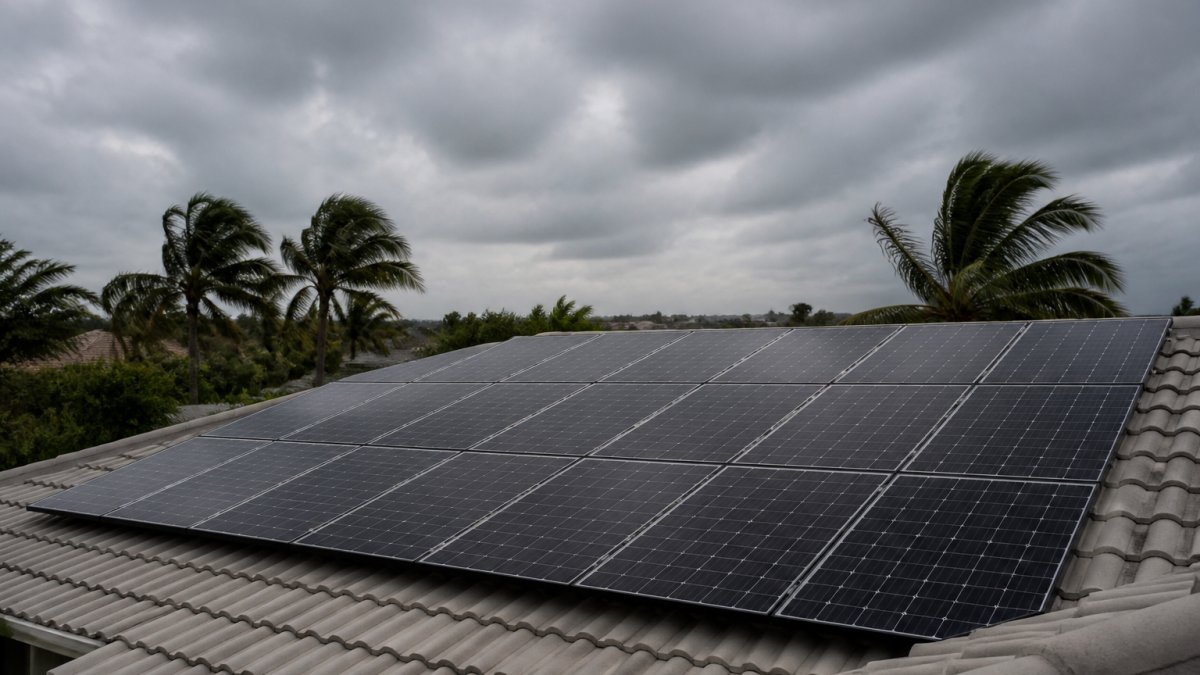
How Different Cloud Types Change Production
Not all clouds are equal. Thin, high clouds let a lot of light pass. Dark storm clouds block far more. A quick way to think about it:
- High, thin clouds: Small drop, panels still produce well.
- Broken or patchy clouds: Output rises and falls as the sun peeks through.
- Heavy overcast: The biggest drop, but production continues.
- Storm clouds: Sharp, short dips, often followed by a quick recovery.
Why Heat and Humidity Matter as Much as Clouds
Heat is the quiet thief. Solar panels lose a little efficiency as they get hotter, and Florida roofs can get very hot. Humidity can add haze that scatters light further, so a hot, hazy, cloudy afternoon can reduce output from more than one direction.
Here is how each cloud type tends to affect production, based on the article’s descriptions.
| Cloud type | Effect on output | Note |
|---|---|---|
| High, thin clouds | Small drop | Panels still produce well |
| Broken or patchy clouds | Output rises and falls | Sun peeks through |
| Heavy overcast | Biggest drop | Production continues |
| Storm clouds | Sharp, short dips | Often followed by quick recovery |
Solar Panels in Rainy Weather: What Storms and Downpours Do
Rain is not the enemy people think it is. During a downpour, production drops, but the rain also rinses dust and pollen off the glass. Clean panels catch more light once the sky clears.
The bigger concern is storms, not the water itself. High winds, flying debris, and power outages are what actually threaten a system. That is why proper mounting, a licensed installation, and a battery backup matter more than the rain.
Always confirm your installer is licensed and insured before signing.
Solar Battery Backup for Cloudy Days: Bridging the Gaps
A battery does not make more sunlight. What it does is store the power your panels made earlier and release it when production dips or the grid goes down. During a string of gray days, a battery bridges the gap between what your roof makes and what your home uses.
This is where pairing solar with storage pays off. If you are weighing a combined project, our guide on integrated solar and electrical installation shows how the two pieces fit together as one job.
Battery sizing depends on your habits. A small battery covers evening lights and the fridge. A larger one can carry more of the house through an outage.
How to Monitor Solar Panel Production Through Gray Weeks
You cannot fix what you cannot see. Monitoring is how you confirm your system is doing its job through the wet months. Most modern systems include an app that shows daily and hourly production. Check it during a gray stretch and compare it to a clear day.
A simple habit helps:
- Note production on a sunny day as your baseline.
- Check output on a heavy overcast day.
- Confirm the drop looks normal, not like a failure.
- Watch for sudden zeros, which can signal a real problem.
If you want to cut your bills further while you track production, our steps on how to lower residential electricity bills pair well with solar. The two work together: solar makes power, and lower use stretches every kilowatt.
Sizing a System for Florida’s Rainy Season
Sizing is where cloudy weather gets designed around, not feared. A system built for clear-sky days alone will feel thin in a wet month. A system sized with the rainy season in mind keeps producing enough to matter.
Sizing depends on factors such as your average monthly use, your roof’s sun exposure, and how much of your bill you want to offset. Once you have a size and cost in mind, you can review financing options before committing.
Myths About Cloudy-Weather Performance Worth Dropping
Plenty of folks still believe solar is pointless in a cloudy climate. Panels work in diffused light, and a well-sized system with storage can handle gray stretches.
Here are the myths we hear most:
- “Solar does not work on cloudy days.” It does, just at lower output.
- “Rain damages the panels.” Rain cleans them; storms are the real risk.
- “A cloudy climate is not worth it.” Sizing and storage solve most of that.
- “You need full sun all day.” Partial sun still produces useful power.
For the bigger picture on whether solar pays off here, our guide to whether solar panels are worth it in Florida walks through the long-term math. It pairs well with this look at cloudy-day output.
Book a Cloudy-Weather Production Review
Clouds change the math, but they do not cancel it. A system designed for gray weeks keeps working when the sky does not cooperate. That is the difference between a solar array that disappoints and one that pays off.
Farrell Electric & Solar is a licensed and insured electrical and solar provider, and as part of the Farrell family of companies, it brings a sustainability-focused approach to energy systems.
If you want to know what your roof can really do through a wet Florida month, book a solar production review with our team. We will look at your roof, your usage, and your goals, then show you what makes sense. Get started with Farrell Electric & Solar and see how your system holds up when the clouds move in.
Frequently Asked Questions
Do solar panels work on cloudy days in Florida?
Yes. Panels keep producing under overcast skies because they respond to daylight, not direct sun alone. Output drops, but it rarely hits zero. A thick storm front might pull production down to a fraction of a clear-sky day, while thin cloud might cost only a modest share. Florida’s frequent partial cloud means production swings hour to hour rather than shutting off. A well-sized system accounts for those swings across the year, not just on the sunniest afternoon.
How much electricity do solar panels produce when it is cloudy?
It depends on cloud thickness and how much diffuse light reaches the array. Thin, bright cloud typically leaves most of a clear-day output intact. Dense, dark storm cloud can cut production sharply, and heavy rain adds another drop. Because the range is wide, the useful question is annual yield, not any single gray afternoon. Your installer’s production estimate should already factor in local weather patterns, and monitoring lets you confirm real output against that estimate over time.
Will a home solar battery keep working during a cloudy day?
A battery stores what the panels made earlier, so it keeps the home running through gray stretches regardless of what the sky is doing. The limit is capacity, not weather. If several cloudy days stack up and the array produces little, the battery drains and needs either sun or grid power to recharge. Sizing the battery to your critical loads, rather than the whole house, stretches that window. Ask your installer how many low-production days your battery can cover.
Should I size a solar system for Florida’s rainy season?
Size for annual production, not the wettest month. Oversizing to cover a rainy week means paying for panels that sit underused the rest of the year. A better approach pairs a system matched to your yearly usage with a battery for short outages and a monitoring setup so you can spot real problems. If summer storms routinely knock out the grid in your area, tell your installer, since backup needs are a separate calculation from production.
