
Table of Contents
- Are Solar Panels Worth It in Florida? The Short Answer
- What Drives Florida Solar Panel Cost in 2026
- Florida Solar Incentives and Tax Credits You Can Claim
- Solar Panel Payback Period Florida Homeowners Should Expect
- Net Metering and Utility Credits: What Changed in Florida
- Are Solar Batteries in Florida Worth Adding?
- Solar Financing, Scam Risk, and Installer Due Diligence
- Pros and Cons: When Solar Makes Sense for Your Household
- Frequently Asked Questions
Last Updated: October 14, 2026
Are Solar Panels Worth It in Florida? The Short Answer
For most Florida homeowners who stay long enough to reach break-even, solar panels are worth it.
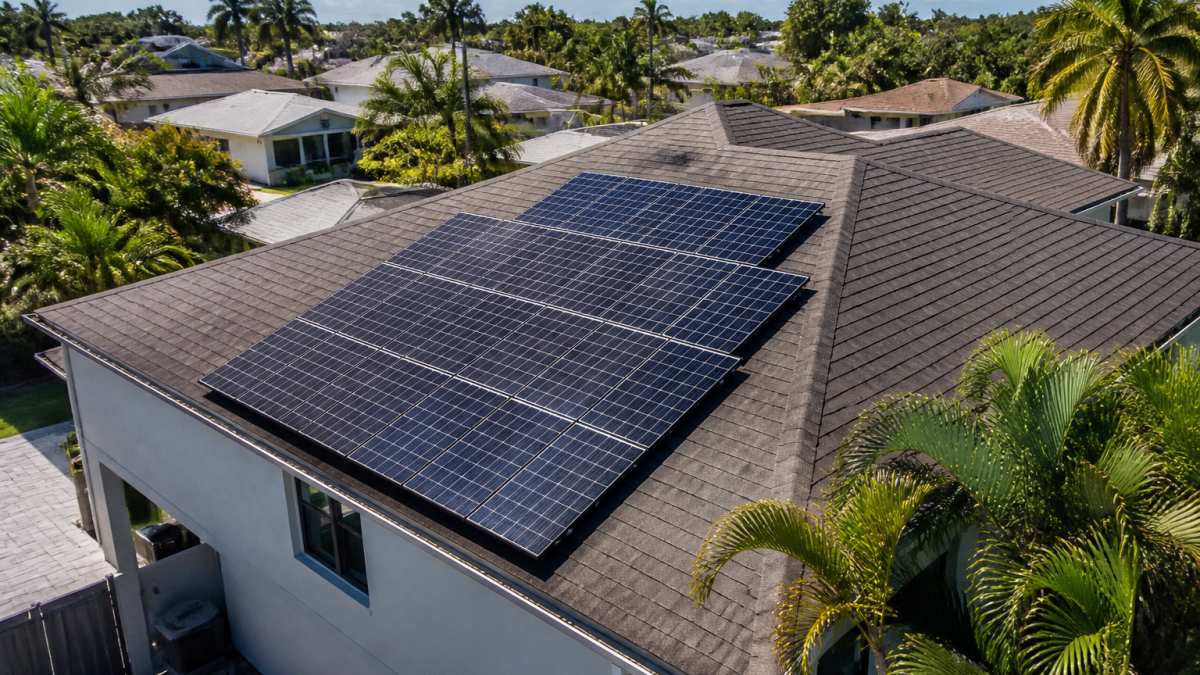
The honest answer is not “yes” for everyone. Solar is a long-term investment, and whether it pays off depends on your electricity consumption, roof, how long you plan to stay, and how your utility credits exported power.
Solar is worth it when three things line up: a suitable roof, a long enough ownership horizon, and an electric bill high enough to justify the system size. Miss any one of them and the payback stretches out.
What Drives Florida Solar Panel Cost in 2026
Florida solar panel cost depends on system size, roof condition, and equipment choices far more than brand. Two homes on the same street can see very different quotes because their energy use and roofs differ.
System Size and Your Electricity Consumption
The biggest cost driver is system size, measured in kilowatts (kW), set by your annual electricity consumption rather than a salesperson’s target. A larger home running central air through a long summer draws more power and needs more panels.
Pull twelve months of your utility bills before you talk to any installer. That usage history, not a guess, determines the correct system size.
Roof Condition, Age, and Hurricane Ratings
Roof condition decides whether solar is practical. Panels are warrantied for decades, but a roof needing replacement in five years forces an expensive removal and reinstall. Replace an aging roof first, then install solar.
In Florida, mounting hardware and panels must meet wind-load requirements tied to your county’s building code. A properly rated installation handles hurricane-season wind speeds, a requirement, not an upgrade.
Installing solar on a roof that is near the end of its life is one of the most common and costly mistakes. You will pay to remove and reinstall the entire array when the roof is replaced.
Florida Solar Incentives and Tax Credits You Can Claim
Florida solar incentives lower the effective cost of a system, and the largest single one is the federal residential clean energy credit. Confirm the current percentage and eligibility rules with a tax professional and the IRS guidance on the residential clean energy credit before you rely on it.
Florida also exempts residential solar equipment from state sales tax and offers a property tax exemption so solar does not raise your assessed value. Verify current terms with your county property appraiser.
| Incentive | What It Does | Where to Verify |
|---|---|---|
| Federal tax credit | Reduces federal tax owed by a percentage of system cost | IRS and a tax professional |
| Sales tax exemption | Removes state sales tax on qualifying equipment | Florida Department of Revenue |
| Property tax exemption | Keeps solar from raising assessed value | County property appraiser |
| Utility rebates | Occasional limited programs | Your specific utility |
Federal Tax Credit and Property Tax Exemptions
The federal credit is a dollar-for-dollar reduction of tax owed, not a deduction, so it is more valuable than its headline number suggests. It applies to eligible equipment and installation costs.
The property tax exemption matters over the long run: in a state with rising assessments, keeping solar out of your taxable value protects savings year after year.
Solar Panel Payback Period Florida Homeowners Should Expect
The solar panel payback period in Florida is the number of years for cumulative bill savings to equal your net system cost after incentives.
Payback is not fixed. It shortens with a high electric rate, a right-sized system, and every incentive claimed; it lengthens when you overpay, oversize, or export for little credit. Trust a payback figure only when you see the inputs.
A Worked Example You Can Copy
Here is the structure a real payback estimate should follow. Plug in your own numbers, not a sales figure.
- System size: a typical right-sized residential array in the state runs somewhere in the 8 kW to 12 kW range, set by your annual usage, not by a sales target.
- Gross cost: use your itemized quote, not a per-watt rule of thumb. Equipment, labor, permitting, and interconnection should all appear as line items.
- Federal credit: apply the current residential clean energy credit percentage to the eligible portion of the cost. Confirm the percentage and eligibility with a tax professional and the IRS guidance on the residential clean energy credit.
Divide net cost by first-year savings for a simple payback, then shorten slightly for rate escalation and lengthen for degradation and maintenance. The result is a range, not a single number.
Why the Range Matters More Than the Number
Two homes on the same street can see payback estimates years apart. A high-usage home with a south-facing, newer roof lands at the short end; a low-usage home, shaded roof, or roof needing replacement soon pushes payback out, sometimes past the point where the investment makes sense.
Ask every installer for a payback calculation that shows the assumptions behind it: your usage, the electric rate, the incentive amount, the credit rate for exported power, the degradation assumption, and any maintenance allowance. If a quote skips those inputs, the payback figure is a sales number, not an estimate.
Payback is a range driven by your usage, your rate, your roof, and how your utility credits exports. Get the assumptions in writing, then test them against your own bills before you sign.
Net Metering and Utility Credits: What Changed in Florida
Net metering rules in Florida have shifted, and this is the part most guides get wrong. Historically, many utilities credited exported solar at the full retail rate, so a kilowatt-hour sent to the grid offset one bought back almost dollar for dollar.
Utilities and regulators have moved toward crediting exported power at a lower, avoided-cost rate, which pays you less for what you send to the grid. The practical effect is that storing and using your own power becomes more valuable than exporting it.
How the Credit Mechanism Actually Works
Under retail-rate crediting, every exported kilowatt-hour offsets a purchased one at the same price, so a system sized to annual usage can zero out much of your bill. Under avoided-cost crediting, the utility pays a lower rate for exports, so the same system produces less bill offset. The gap between those rates is the biggest variable in your return.
Two design consequences follow:
- Self-consumption first. Size and orient the system around what your home uses in real time, not around maximizing exports.
- Storage becomes a financial tool, not just a backup tool. A battery lets you keep midday production for evening use, when rates are highest and export credits are lowest.
Why Territory Matters
Rules are set utility by utility, and major investor-owned utilities do not all credit exports the same way. A homeowner served by one utility can see a materially different return than a neighbor on another, even with identical panels and usage. A generic “net metering in Florida” answer is not useful for your decision.
Before you sign, ask your installer to show:
- Which utility territory you are in and what that utility currently credits for exports
- Whether the credit is a dollar-for-dollar offset or a lower avoided-cost rate
- Whether unused credits carry forward, expire, or are paid out at year-end
A payback estimate built on retail-rate crediting will overstate your savings if your utility has moved to a lower export rate. Ask which rate the estimate assumes, and get it in writing.
Design your system around your own consumption first. Self-consumption is now the foundation of a strong return, and the export credit is a secondary benefit, not the main event.
Are Solar Batteries in Florida Worth Adding?
Solar batteries in Florida are worth adding when backup power and self-consumption matter more than the lowest upfront cost. A battery stores daytime production for evening use, when your home draws the most electricity and the grid charges the most.
Two forces make batteries more attractive here than in many states: lower export credits make keeping your own power worth more, and hurricane season brings real outage risk, so a battery paired with solar can keep critical circuits running when the grid goes down.
A battery raises upfront cost and can extend payback.
Solar Financing, Scam Risk, and Installer Due Diligence
Solar financing ranges from cash purchases to loans, leases, and power purchase agreements, and each changes who owns the system and claims the tax credit. With cash or a loan, you own the system and typically claim the credit; with a lease or PPA, a third party usually owns it and claims the credit while you pay monthly.
Zero-down solar offers are common and legitimate in some cases, but they also attract bad actors. Protect yourself with a simple due-diligence checklist:
- Confirm the installer is licensed and insured, and verify the license number with the state
- Get at least three itemized quotes and compare them line by line
- Ask for local references and actually call them
High-pressure sales tactics, unsolicited door-knocking, and quotes that balloon after you sign are classic solar scam signals. A legitimate installer will let you take the contract home and review it.
At Farrell Electric & Solar, our licensed and insured team handles the electrical work and the solar installation together, so permits, inspections, and interconnection move through one coordinated process rather than several disconnected crews. As a sister company of Team Farrell, we bring broader construction resources to projects that involve roofing or structural work.
Pros and Cons: When Solar Makes Sense for Your Household
Solar makes sense for households with high electricity use, a sound roof, a long ownership horizon, and the tax situation to use the federal credit.
Pros
- Lower monthly electricity costs and protection against rising rates
- Federal tax credit and state incentives reduce the effective cost
- Backup power and storm resilience when paired with a battery
Cons
- Significant upfront cost, even after incentives
- Payback takes years, so a short ownership horizon hurts the math
- Lower export credits reduce the value of power you send to the grid
If you are unsure where your household lands, the fastest way to find out is a usage review and an itemized quote. That converts a vague “is it worth it” question into a specific payback number you can act on.
Frequently Asked Questions
Are solar panels actually a good investment in Florida?
For many Florida homeowners, yes. The state gets abundant sunlight year-round, electricity rates keep climbing, and the 30% federal tax credit lowers upfront cost significantly. Payback periods commonly fall in the 7 to 12 year range depending on system size, energy use, and utility net-metering terms. If you plan to stay in your home long-term and your roof is in good shape, solar panels Florida homeowners install often deliver solid long-term savings. If you plan to move within a few years, the math gets tighter.
How much do solar panels cost for a Florida home?
Florida solar panel cost varies widely based on system size, roof complexity, equipment brand, and whether you add battery storage. Farrell Electric & Solar provides free quotes so you can see exact numbers for your home. Get at least three installer quotes and compare the total lifetime cost, not just the sticker price.
How long does it take for solar panels to pay for themselves in Florida?
The solar panel payback period Florida homeowners typically see ranges from 7 to 12 years. Your exact number depends on your monthly electricity bill, system size, net-metering credits, and whether you finance or pay cash. Higher electricity consumption and rising utility rates shorten payback. Cash purchases pay back faster than financed systems because you avoid interest. Ask your installer for a transparent, line-item payback calculation so you can verify the numbers yourself.
Are solar batteries in Florida worth the added cost?
Solar batteries in Florida make sense if you want backup power during hurricane season outages or if your utility’s net-metering credits have dropped in value. A battery lets you store excess solar energy and use it at night or during an outage. Without a battery, a grid-tied system shuts off during a power outage for safety reasons. If storm resilience matters to you, a battery is worth pricing out. If your only goal is lowering bills, the payback on a battery alone is longer.
What Florida solar incentives can I claim in 2026?
The main Florida solar incentives include the 30% federal residential clean energy tax credit, a state sales tax exemption on solar equipment, and a property tax exemption that keeps solar from raising your assessed home value. Some utilities also offer additional rebates. Eligibility rules and program funding change, so verify current details with your installer and a tax professional before you buy. These incentives together can meaningfully reduce your net cost.
Do solar panels still work during a power outage?
Standard grid-tied solar systems shut off automatically during a power outage to protect utility workers. If you want power during an outage, you need a solar battery or a generator. In Florida, where hurricane season brings extended outages, pairing solar with battery storage gives you backup power for essential circuits. Ask your installer which loads a proposed battery can carry and for how long during an outage.
Deciding whether solar is worth it in Florida comes down to your roof, your usage, and how long you plan to stay. Farrell Electric & Solar can run those numbers with you and design a system built for your home, with licensed and insured installation, hurricane-rated mounting, and battery storage options for backup power. Our “One Call Does It All” approach keeps the electrical and solar work under one roof. Book online with Farrell Electric & Solar and get a clear, itemized quote for your home.