
Last Updated: November 8, 2026
Quick Summary
A home battery storage system holds electricity from your solar panels or the grid so your household can use it later. It provides backup power during outages and can lower bills by shifting use away from expensive peak hours. The real value depends on your critical loads, your utility’s rate plan, and the battery’s usable capacity.
- Sizing for backup means listing critical circuits and estimating how many hours you need them.
- Usable capacity, not nameplate capacity, should be the basis for comparing quotes.
- Bill savings depend heavily on a wide peak-to-off-peak rate spread from your utility.
- Round-trip efficiency losses narrow the savings from charging the battery off-peak.
- Confirm your electrical panel’s capacity before choosing a battery size.
Table of Contents
- What a Home Battery Storage System Does
- Energy Independence and Backup Power During Outages
- Lowering Electricity Bills With Peak-Rate Shifting
- Home Battery Storage System Cost and Payback Scenarios
- Home Battery Backup Without Solar: When It Makes Sense
- Choosing the Best Solar Battery Backup System for Your Home
- Planning Solar Panel Battery Storage for Your Home Next
- Frequently Asked Questions
What a Home Battery Storage System Does
A home battery storage system holds electricity so your household can use it later, instead of pulling everything from the utility grid in real time.
The key specifications are usable capacity (measured in kilowatt-hours, or kWh), power output (kilowatts, or kW), and round-trip efficiency. Capacity tells you how long the battery can supply your home. Power output tells you how many appliances can run at once, such as an air conditioner and a refrigerator together.
A battery is not the same as a generator. It switches on automatically, produces no emissions, and runs silently. Its limitation is duration: a battery empties, while a gas generator runs as long as it has fuel.
Energy Independence and Backup Power During Outages
The most common reason homeowners consider storage is resilience. Because backup needs depend on which circuits matter most, comparing home battery storage products can help clarify how much capacity is worth paying for.
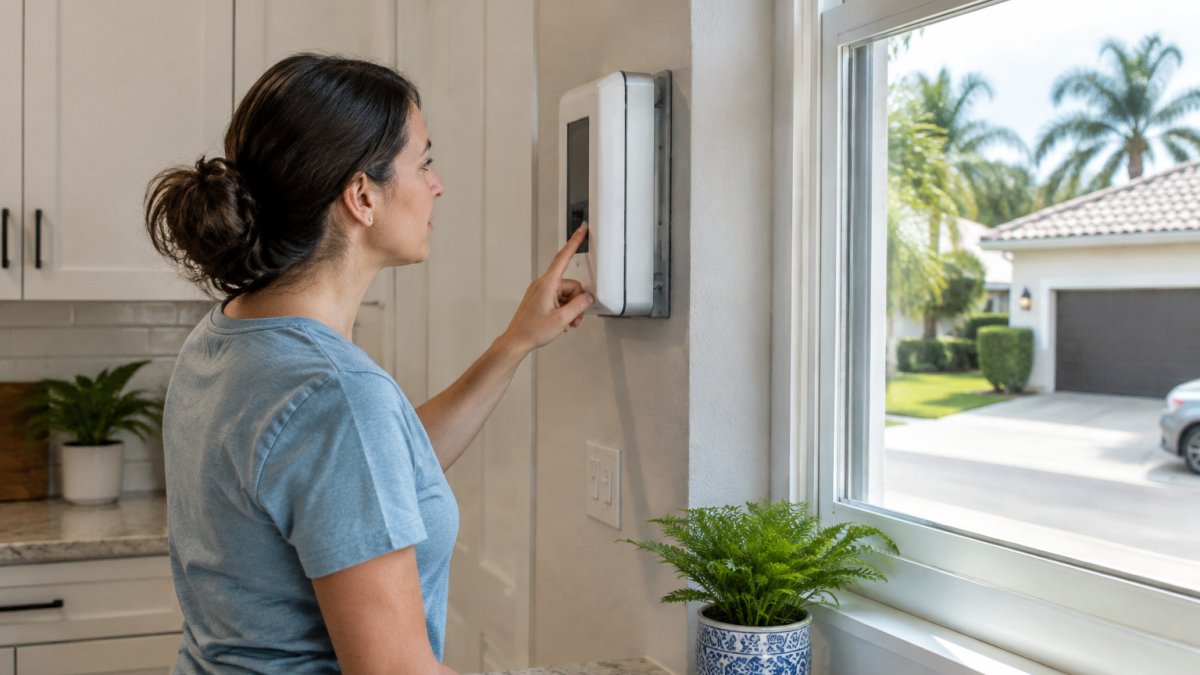
Energy independence is a related but separate goal. A battery reduces how often your house draws from the grid, which matters if you want to ride out grid instability or limit your exposure to utility rate changes.
Backup performance depends on three things you should check before buying:
- Critical-load sizing: Add up the wattage of the circuits you want to power and estimate how many hours you need them.
- Inverter rating: The inverter caps how much power the house can draw at once, regardless of battery size.
- Automatic transfer: Confirm the system isolates from the grid and switches over without manual steps.
Many buyers assume a battery will run everything indefinitely. In practice, a typical residential battery covering essential loads may last one day or a few days, depending on usage and sunlight if solar is connected.
Lowering Electricity Bills With Peak-Rate Shifting
Battery savings come mostly from shifting when you use grid power, not from eliminating it. Many U.S. utilities use time-of-use rate plans, where electricity costs more during peak hours, often late afternoon and evening (Federal Demand Flexibility).
This is called load shifting, and its value depends entirely on your rate structure. If your utility charges a flat rate, a battery adds little financial benefit beyond backup. If your rate has a steep peak-period premium, the savings can be meaningful.
A common mistake is assuming the battery will cut your bill by a fixed percentage.
Home Battery Storage System Cost and Payback Scenarios
Sticker price is the least useful number in a battery decision. What matters is installed cost per usable kilowatt-hour, what the system will actually deliver over its warrantied life, and whether the rate spread it captures is wide enough to recover the investment. Two homes with identical batteries can see payback periods that differ substantially, because of rate structure and how the household uses power.
Build the cost picture in four layers
1. Installed cost per usable kWh. Divide the full installed price, equipment, labor, permitting, transfer switch or backup subpanel, and any panel upgrade, by usable capacity, not nameplate capacity.
2. Round-trip efficiency losses. Every charge-discharge cycle loses energy. At roughly 90% round-trip efficiency, you must put in about 1.1 kWh to get 1 kWh back out.
3. Degradation and replacement timing. Lithium packs lose capacity gradually.
4. Incentives and tax treatment. Federal and state incentives can materially change the math, but eligibility rules, caps, and step-downs change.
The payback formula, stated plainly
Payback in years = net installed cost after verified incentives ÷ annual bill savings.
Annual bill savings ≈ (kWh shifted from peak to off-peak per year) × (peak rate − off-peak rate) × round-trip efficiency − any program fees.
Worked example logic, using placeholder rates you should replace with your own tariff: if you shift 2,500 kWh per year and the peak-to-off-peak spread is 20 cents per kWh, gross arbitrage is about $500 per year before efficiency losses. At 90% efficiency that drops to roughly $450. Against a net installed cost in the five figures, that is a payback measured in many years, which is why backup value, not arbitrage, often carries the decision.
What actually moves payback
- A steep peak premium. A wide spread between on-peak and off-peak rates is the single biggest financial lever.
- High peak-period consumption. A battery can only shift load you actually run during peak hours.
- Solar charging. Free daytime charging removes the efficiency loss and the off-peak purchase cost from the equation, which is why storage paired with solar usually pays back faster than standalone storage.
- Utility programs. Demand response and virtual power plant payments can add revenue, but read the terms: participation may reserve part of your capacity and reduce backup duration.
Watch out: a proposal that shows a short payback without disclosing the rate assumptions, efficiency losses, degradation, and incentive eligibility is not a payback estimate, it is a sales number. Ask for the assumptions in writing and check them against your own utility bill.
Pricing depends on capacity, brand, installation complexity, and whether the system is added to an existing array or installed alongside new panels, so obtain a site-specific quote from Farrell Electric & Solar’s website rather than relying on a generic figure.
Home Battery Backup Without Solar: When It Makes Sense
A battery without solar is a grid-charging asset. It buys low, sells high, to your own house, and provides outage backup as a secondary benefit. Whether that trade works is not a matter of opinion; it comes down to your tariff, your outage history, and how much of the battery you are willing to reserve for backup instead of arbitrage.
The three conditions that make standalone storage pencil out
1. A wide, predictable peak-to-off-peak spread. Time-of-use plans with a steep on-peak premium are the engine of standalone savings.
2. Enough peak-period load to absorb the battery’s output. A battery can only shift electricity you would otherwise buy at peak rates. If your household runs little during peak hours, you cannot capture the spread no matter how large the battery is.
3. A backup need you value independently. Standalone storage often makes sense when outage protection has real value, medical equipment, a home office, sump pumps, or a history of storm-related outages.
The limits most buyers do not hear about
- Efficiency losses cut into arbitrage. Charging from the grid and discharging later loses energy to round-trip inefficiency, so the effective spread is narrower than the tariff suggests.
- Backup reserve reduces arbitrage capacity. If you reserve 30% of the battery for outages, only the remaining capacity is available for load shifting. You cannot spend the same kilowatt-hour twice.
- Program participation can claim your capacity. Demand response and virtual power plant programs may discharge your battery during grid events, sometimes when you would rather keep the reserve. Read the terms for capacity commitments and opt-out rules.
- Export rules vary by utility. Some utilities limit or change the compensation for power you send back to the grid. Confirm your interconnection and export terms before assuming any export revenue.
- Degradation shrinks the arbitrage base over time. A battery that shifts a certain number of kWh in year one shifts less in year ten, so savings taper.
A simple decision test
Add up your annual peak-period kWh, multiply by the peak-to-off-peak spread, apply round-trip efficiency, and subtract any program fees. Compare that annual figure to the net installed cost.
Watch out: homeowners sometimes buy a battery sized for arbitrage and then discover that reserving capacity for outages leaves too little to capture the spread. Decide up front how much backup you need, then size the battery for arbitrage plus that reserve, not the other way around.
Homeowners across Pasco, Pinellas, Hillsborough and Hernando counties often ask whether a battery is worth it without solar. Cloud cover also affects solar charging, which matters if you later combine storage with panels; for a closer look at that trade-off, see our guide on Do Solar Panels Work on Cloudy Days in Florida?
The three conditions below determine whether standalone storage pays off, and the limits buyers often miss.
| Condition or limit | What to check | Why it matters |
|---|---|---|
| Wide peak-to-off-peak spread | Compare on-peak and off-peak rates per kWh | Arbitrage alone rarely recovers cost on a flat rate |
| Enough peak-period load | Estimate peak kWh from twelve months of bills | A battery can only shift load you run at peak |
| Independent backup value | Outage history and critical loads | Justifies storage even when bill savings are modest |
| Round-trip efficiency losses | Charge-discharge loss | Narrows the effective spread |
| Backup reserve | Share of capacity kept for outages | Reserved kWh cannot also be used for load shifting |
| Program capacity claims | Demand response terms | Programs may discharge your reserve during grid events |
| Export rules | Utility interconnection terms | Export compensation varies by utility |
Choosing the Best Solar Battery Backup System for Your Home
No single battery is best for every house. The right choice depends on your critical loads, your roof and solar configuration, your electrical panel’s capacity and your budget.
Pay attention to compatibility. Some batteries work only with specific inverters, and retrofitting an older solar system may require equipment upgrades. You can learn more about our electrical panel services.
Evaluate each candidate on the same criteria: usable capacity, continuous and surge power ratings, round-trip efficiency, warranty terms, installer experience, and how the system communicates with your utility if you participate in a program. Ask for the complete specification sheet, not a summary.
Planning Solar Panel Battery Storage for Your Home Next
If you are ready to move forward, the right sequence matters. Start with a load review: pull twelve months of utility bills, identify your peak-period usage, and list the circuits you want on backup. Next, get your electrical panel evaluated, since capacity limits often shape the battery size you can practically install.
Then request two or three written proposals that show usable capacity, inverter ratings, warranty terms and projected payback under your actual rate plan. Compare how each proposal handles outage transfer and whether the design leaves room for future solar expansion. Finally, confirm permit requirements and ask who handles inspection and the utility interconnection paperwork.
A combined solar and storage project is easier to plan when one team handles both the electrical and solar work. If you want a site-specific assessment, book online to get started.
Farrell Electric & Solar installs and integrates home battery storage for homeowners across the Tampa Bay area. Our licensed electricians handle panel upgrades, solar connections and backup-power planning in one coordinated project.
Frequently Asked Questions
Is home battery storage worth it?
It depends on your electricity rates, how often you lose power, and whether you already have solar. Homes on time-of-use rates with large peak-period charges gain the most from shifting usage to stored energy. Homes with frequent outages gain backup value. Homes with low rates and reliable grid service often need longer payback periods. Compare the system’s usable capacity and installed cost against your last twelve months of utility bills before deciding. A licensed installer can model these numbers for your specific rate plan.
Can you use a home battery without solar panels?
Yes. A battery can charge from the grid, which lets you store electricity during off-peak hours and use it during expensive peak periods. It can also provide backup power during an outage. Without solar, the bill savings are usually smaller because you are buying the stored electricity from the utility at off-peak rates. The strongest case without solar is backup power and peak-rate management in a home with high evening rates or frequent outages.
What are the downsides of home battery storage?
The main drawbacks are upfront cost, limited usable capacity relative to whole-home demand, and battery degradation over time. Round-trip efficiency means some energy is lost each time it is stored and released. Batteries also require space, proper ventilation, and installation that meets local electrical code. Warranties typically cover a set number of years or throughput cycles, so review the terms before purchasing. Savings can be modest in areas with low electricity rates or limited time-of-use pricing.
